
New Orleans Succession Records and Probate Filings
New Orleans probate court records and succession filings are held by the Orleans Parish Clerk of Civil District Court at 421 Loyola Avenue. The Clerk's office manages all succession cases for residents of New Orleans through Docket 1, handles access to historical notarial archives dating back to 1731, and gives the public both in-person and online access to estate records. This guide explains how to find those records, what they contain, and what rules apply under Louisiana law.
New Orleans Quick Facts
Where to File Probate Records in New Orleans
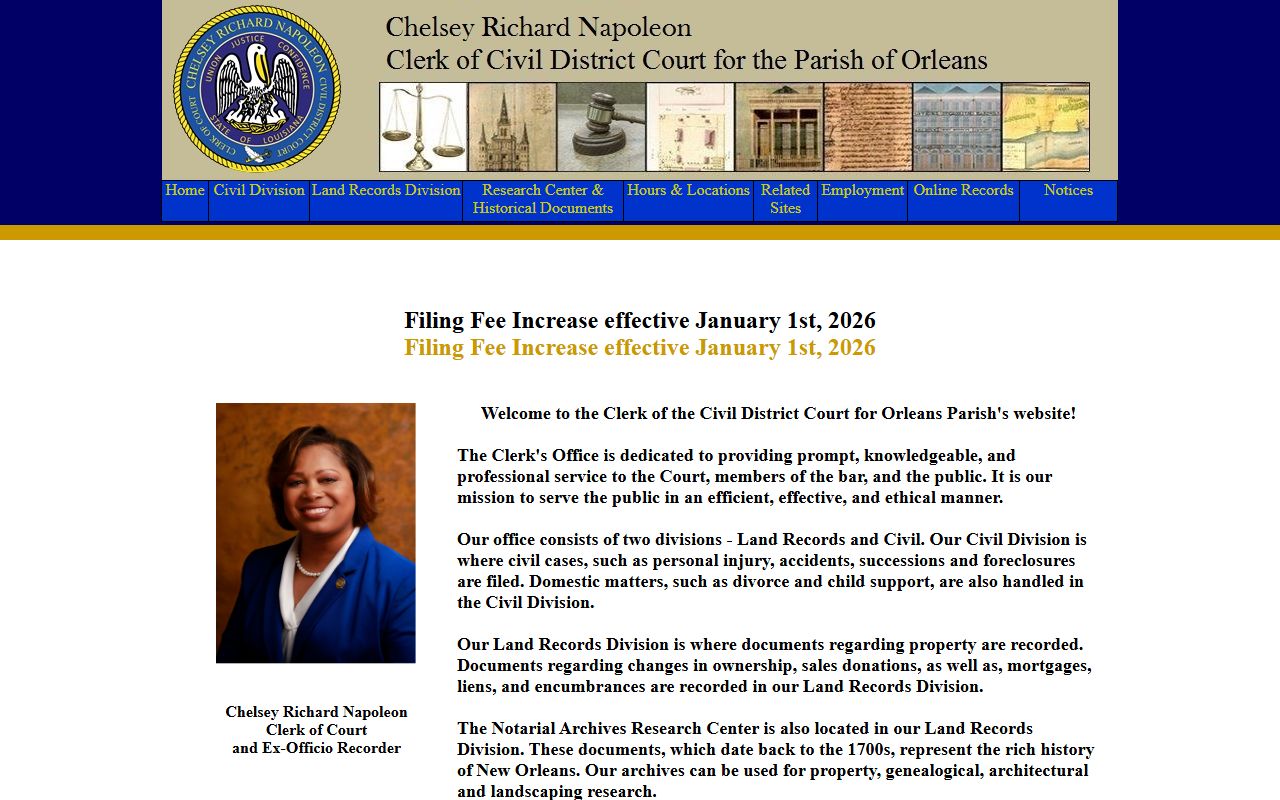
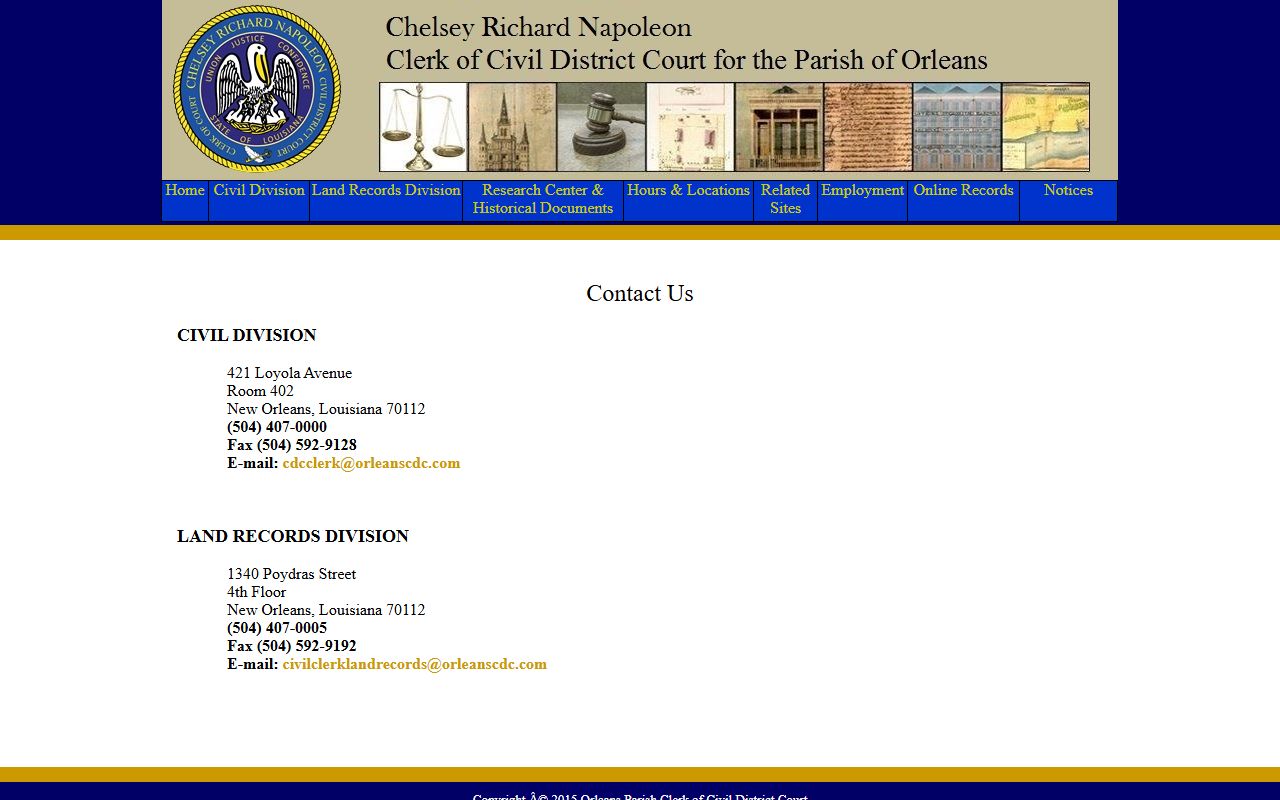
All succession cases for New Orleans residents go to the Orleans Parish Civil District Court. The Clerk of Civil District Court, currently Chelsey Richard Napoleon, maintains these records. The Civil Division is on the 4th floor at 421 Loyola Avenue, New Orleans, LA 70112. This is the only filing location for Orleans Parish succession matters. There is no separate city-level court for these cases.
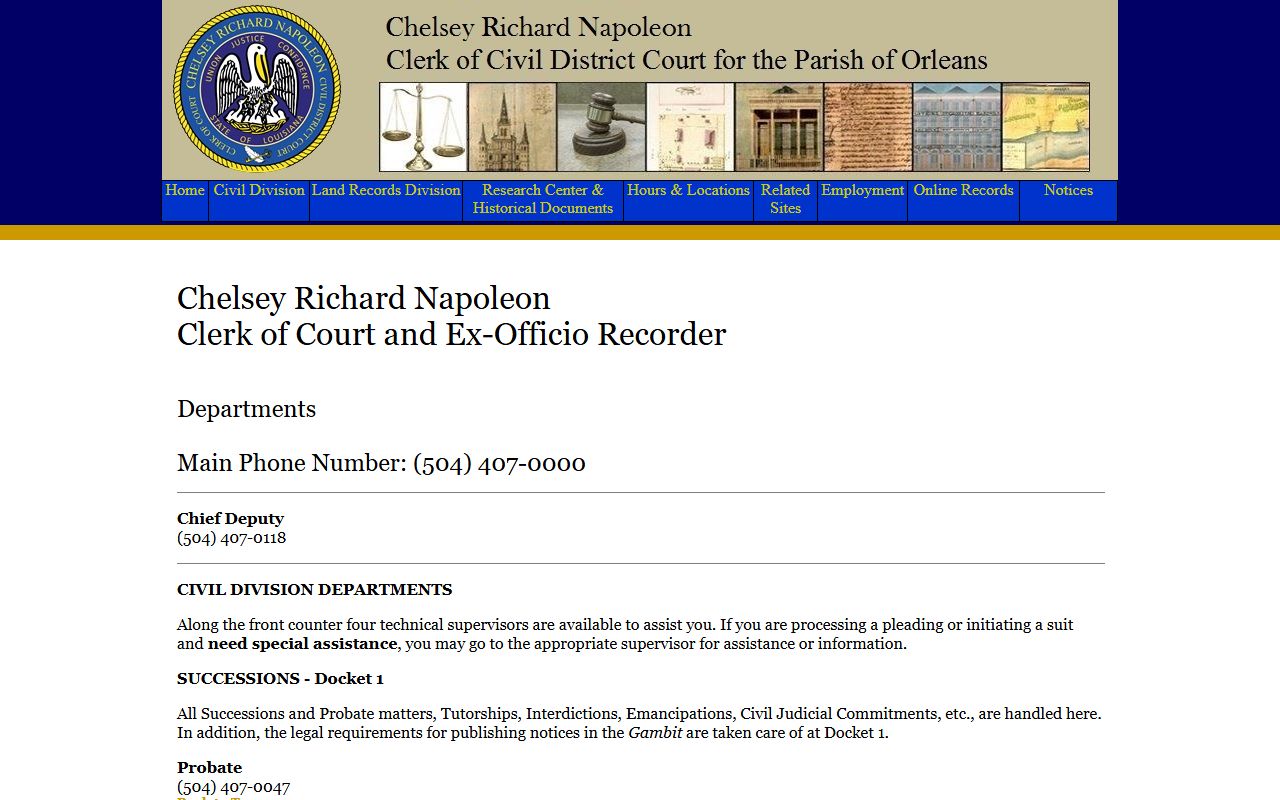
The main number is (504) 407-0000. For questions about successions specifically, call the Docket 1 line at (504) 407-0047. The Record Room, where you can pull active case files, can be reached at (504) 407-0036. Office hours are Monday through Friday, 8:30 AM to 5:00 PM. After-hours filing is available from 5:00 PM to midnight for urgent matters.
| Clerk | Chelsey Richard Napoleon |
|---|---|
| Division | Civil District Court, Civil Division |
| Address | 421 Loyola Avenue, 4th Floor, New Orleans, LA 70112 |
| Main Phone | (504) 407-0000 |
| Successions (Docket 1) | (504) 407-0047 |
| Record Room | (504) 407-0036 |
| Hours | Monday-Friday, 8:30 AM - 5:00 PM |
| After-Hours Filing | 5:00 PM - Midnight |
| Website | orleanscivilclerk.com |
How to Search New Orleans Probate Court Records
You can search New Orleans succession records in person, online through the Remote Access System, or by contacting the Record Room directly. Each method works, but they serve different needs. In-person access at the Record Room on the 4th floor is free and lets you review a file before ordering copies. Active cases can be pulled at the counter. Completed cases that have moved to the warehouse may take extra time to retrieve, so call ahead if you think a case is older or closed.
One important detail: there are two storage locations. Active and recent cases are in the Record Room. Completed cases go to an off-site warehouse. If you need a succession file from before 2003, it may be in the Annex Record Room, which houses successions and domestic matters from 1918 to 2003. Knowing roughly when a case was filed will save you a trip. Ask staff at the counter which location holds the file you need.
Mail requests should go to the office at 421 Loyola Avenue, 4th Floor, New Orleans, LA 70112. Include the full name of the deceased, an approximate year of death or filing, and the type of document you need. The office can confirm whether the record exists and give you a cost estimate before you send payment.
Online Access for New Orleans Succession Records
The Orleans Parish Clerk of Civil District Court runs a Remote Access System at orleanscivilclerk.com. This gives you online access to civil and succession records from any internet-connected device. The system offers daily, monthly, and yearly subscription options. If you only need records once, the daily rate makes sense. Attorneys and researchers who use the system often tend to get a monthly or annual plan.
Through the Remote Access System you can search by party name, case number, and document type. You can view case indexes and, for records that have been scanned, actual document images. This is useful for attorneys handling estates from out of town, for title companies doing property research, and for family members trying to locate a succession before coming in person. The portal does not replace an in-person visit for obtaining certified copies, but it can tell you whether a case exists and what is in the file.
Notarial Archives and Historical Records
New Orleans holds something no other city in Louisiana has: the Notarial Archives. These records cover notarial acts from 1731 to 1970, more than two centuries of legal transactions. The Archives include property sales, successions, marriage contracts, and wills recorded by New Orleans notaries. For genealogists and estate researchers working on cases involving old New Orleans families, this is a primary source.
The Notarial Archives are separate from the current Record Room. If you are looking for succession-related notarial acts from before the modern court era, you will need to contact the Archives directly rather than calling the Docket 1 line. The Clerk's website has contact information for the Notarial Archives research staff. Some of the oldest records in the collection predate Louisiana statehood entirely, making them unique in the country.
For records from 1918 through 2003 that fall outside the Notarial Archives scope, the Annex Record Room is the right place. It stores successions and domestic case files from that period. Anything after 2003 should be in the main Record Room or the off-site warehouse for completed cases.
What Records Are in a New Orleans Succession File
A succession file in New Orleans typically starts with a petition to open the succession. That petition names the person who died, identifies the heirs, and lists the assets subject to distribution. From there, the file builds as the case moves through court. You can find inventories of real and personal property, statements of debts, court orders on interim matters, and eventually a judgment of possession that formally transfers the estate to the heirs.
Wills are also kept by the Clerk. Louisiana law recognizes two kinds: olographic wills, which the testator writes and signs entirely by hand, and notarial wills, which are signed before a notary and two witnesses. Once a succession is opened, any will associated with the estate becomes part of the public court record. You do not need to be an heir to view it.
Other documents that can appear in a succession file include tutorship petitions (when minor children are involved), interdiction proceedings (when a person is incapacitated), affidavits of heirship, and pleadings related to contested wills. Under Louisiana R.S. 44:1, all of these are public records once filed. Anyone can request access; no relationship to the deceased is required.
Louisiana Succession Law for New Orleans Residents
Louisiana succession law comes from a civil law tradition rooted in French and Spanish legal codes. It differs from probate law in every other U.S. state. Under Civil Code Art. 871, a succession opens at the moment of death. The estate is then administered in the parish where the deceased was domiciled, which for New Orleans residents means Orleans Parish and the Civil District Court.
Civil Code Art. 873 sets the rule that succession is filed in the parish of the deceased's domicile. This applies to immovable property in Louisiana and to personal property regardless of where it is held. If a New Orleans resident owned property in another parish, that property still comes through Orleans Parish court in most cases.
Forced heirship is one of the most distinctive features of Louisiana law. Under Civil Code Art. 1493, children who are under 24 years old or who are permanently incapacitated are forced heirs. They are entitled to a fixed portion of the estate called the legitime. A parent cannot cut a forced heir out of a will entirely. If they try, the forced heir can challenge the will in court, which can add time and cost to a succession.
Louisiana is also a community property state. Under Civil Code Art. 876, property a married couple acquires during the marriage belongs equally to both. When one spouse dies, their half of the community goes through succession while the survivor keeps their own half. Separate property, meaning assets owned before marriage or received by gift or inheritance during marriage, follows different rules and passes entirely through the succession.
For smaller estates, R.S. 9:1555 allows a simplified small succession affidavit when the net estate value is $125,000 or less and at least 90 days have passed since the death. This skips the full court proceeding and saves time. Not every estate qualifies, and it is worth consulting a notary or attorney before assuming this route is available.
Copy Fees for New Orleans Probate Records
The Orleans Parish Clerk of Civil District Court charges set fees for copies. Certified copies cost $3 per page. Uncertified copies cost $1 per page. These fees apply to succession records and other civil court documents held by the office. Certified copies carry the clerk's official stamp and are required for many legal and financial transactions, including title transfers and out-of-state estate proceedings.
If you are ordering copies in person, payment is accepted at the counter. For mail requests, contact the office at (504) 407-0036 to confirm the exact amount before sending payment. Fees can change, so always verify current rates before mailing a check. The office does not hold requests without payment confirmed in advance.
Legal Help in New Orleans
Several legal aid organizations serve New Orleans residents who need help with succession matters but cannot afford an attorney. Southeast Louisiana Legal Services provides free civil legal help to income-qualifying residents across the New Orleans area. They handle estate and succession issues. Their office can be reached through slls.org.
The New Orleans Bar Association runs a lawyer referral service that can connect you with a probate or estate attorney in the area. Many attorneys offer a first consultation at a reduced or flat rate. The Louisiana State Bar Association also maintains a statewide referral directory. For self-represented individuals, louisianalawhelp.org has guides on succession, small estates, and navigating the clerk's office without an attorney.
The Louisiana Supreme Court website has general information on the state court system. For questions about statewide electronic filing and record access across multiple parishes, eClerks LA is a useful resource. Nearby cities like Metairie, Kenner, Terrytown, and Marrero are all in Jefferson Parish, so their succession cases do not go through the Orleans Parish court.
Orleans Parish Probate Court Records
New Orleans is in Orleans Parish. All succession cases for New Orleans residents are filed with the Orleans Parish Clerk of Civil District Court. For full details on the parish clerk, online portals, fees, and all services, visit the Orleans Parish probate court records page.