
Louisiana Probate Court Records
Louisiana probate court records, formally called succession records, are filed and kept by the Clerk of Court in each of the state's 64 parishes. When someone dies owning property in Louisiana, the parish where that person lived opens a succession case. These files hold wills, estate inventories, judgments of possession, and all court orders that move assets to heirs. You can search Louisiana probate court records online through ClerkConnect, eClerks LA, and individual parish portals, or visit any parish clerk office in person during regular business hours.
Louisiana Probate Court Records Quick Facts
Succession Records: Louisiana's Probate Court Records
Louisiana calls the estate court process a "succession" rather than probate. This comes from the state's civil law system, which draws from French and Spanish legal traditions instead of the English common law used in most other states. Both terms describe the same core process: proving a will in court, naming someone to manage an estate, paying debts, and distributing property to heirs. If you are looking for Louisiana probate court records, you are searching for succession case files held at the parish Clerk of Court office.
Each of Louisiana's 64 parishes has its own Clerk of Court who keeps all succession records for that parish. Cases are filed in the parish where the deceased person lived at the time of death. Louisiana Civil Code Article 873 sets the place of succession as the domicile of the deceased. If a non-resident owned property in Louisiana, the succession is filed in the parish where that property sits. That is called an ancillary succession.
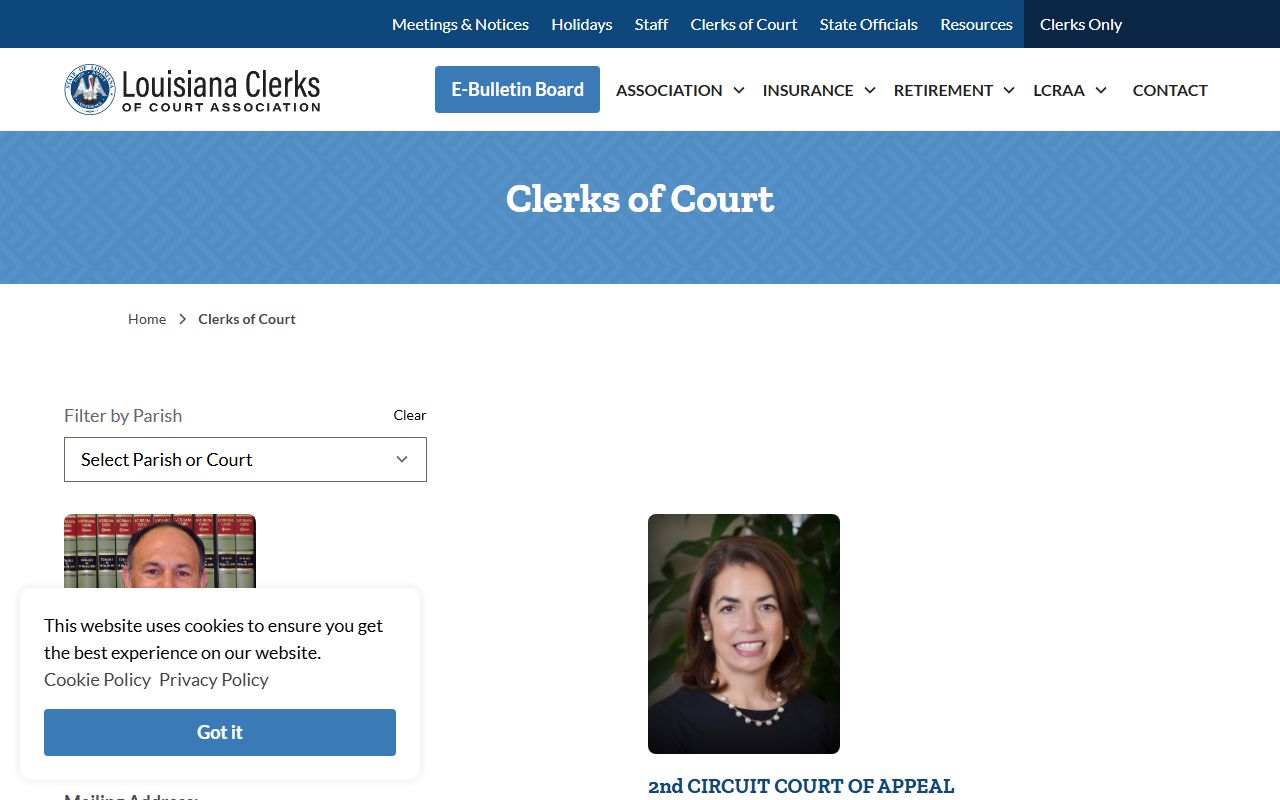
The Louisiana Clerks of Court Association keeps a full directory of all 64 parish clerks. Their site at laclerksofcourt.org is the fastest way to find the right clerk if you are not sure which parish handled a particular estate.

Where to Find Louisiana Probate Court Records
The parish Clerk of Court is the main source for Louisiana probate court records. Every succession case filed in the state is kept at the clerk's office in the parish where it was opened. Clerks issue letters testamentary, store the full case file, and certify copies of judgments and orders. Most clerk offices are open Monday through Friday, 8:30 AM to 4:30 PM, though some open at 8:00 AM.
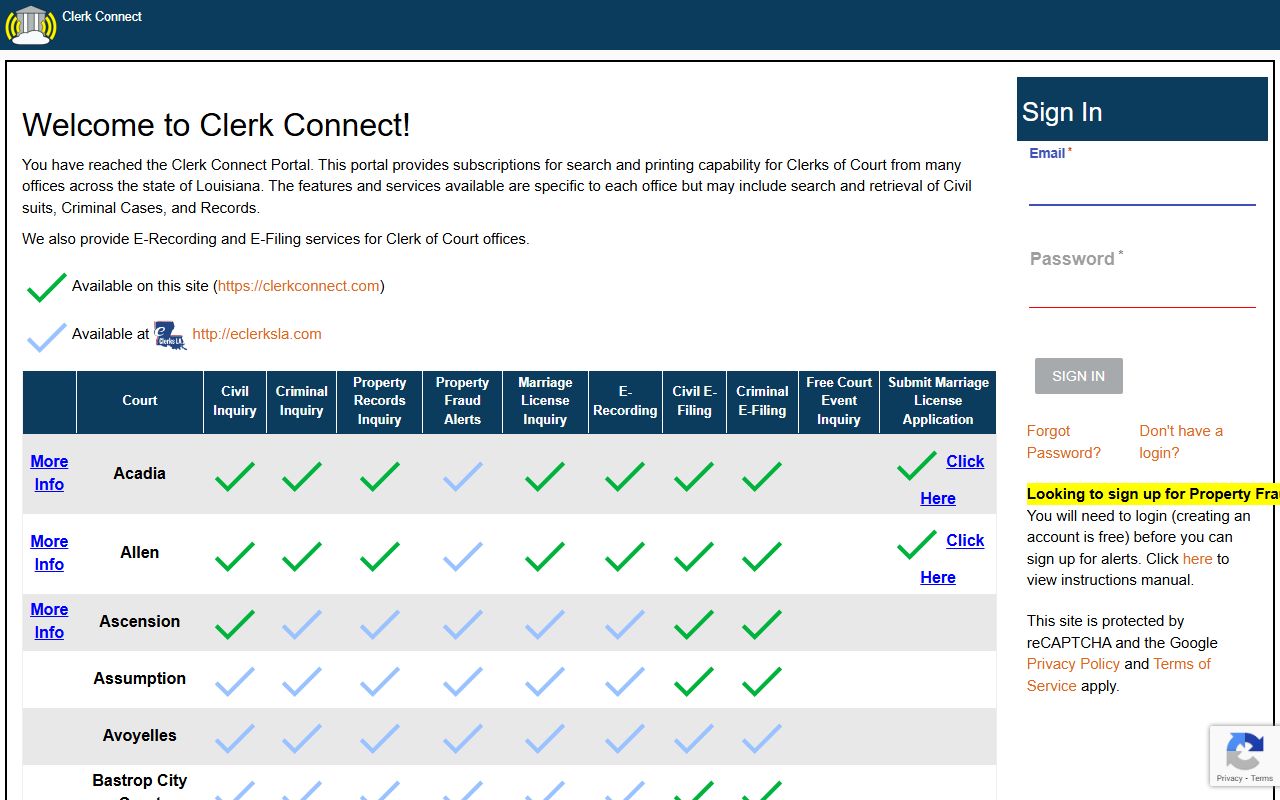
Two major statewide systems give broad online access to Louisiana succession records. The ClerkConnect portal serves many parishes across the state. It lets subscribers search civil suits, property records, and probate filings by name, case number, date range, or case type. Parishes on ClerkConnect include Caddo, Bossier, East Baton Rouge, Lafourche, Lincoln, Allen, Jackson, Natchitoches, Claiborne, and Richland. ClerkConnect also supports e-filing and e-recording in a number of those parishes.
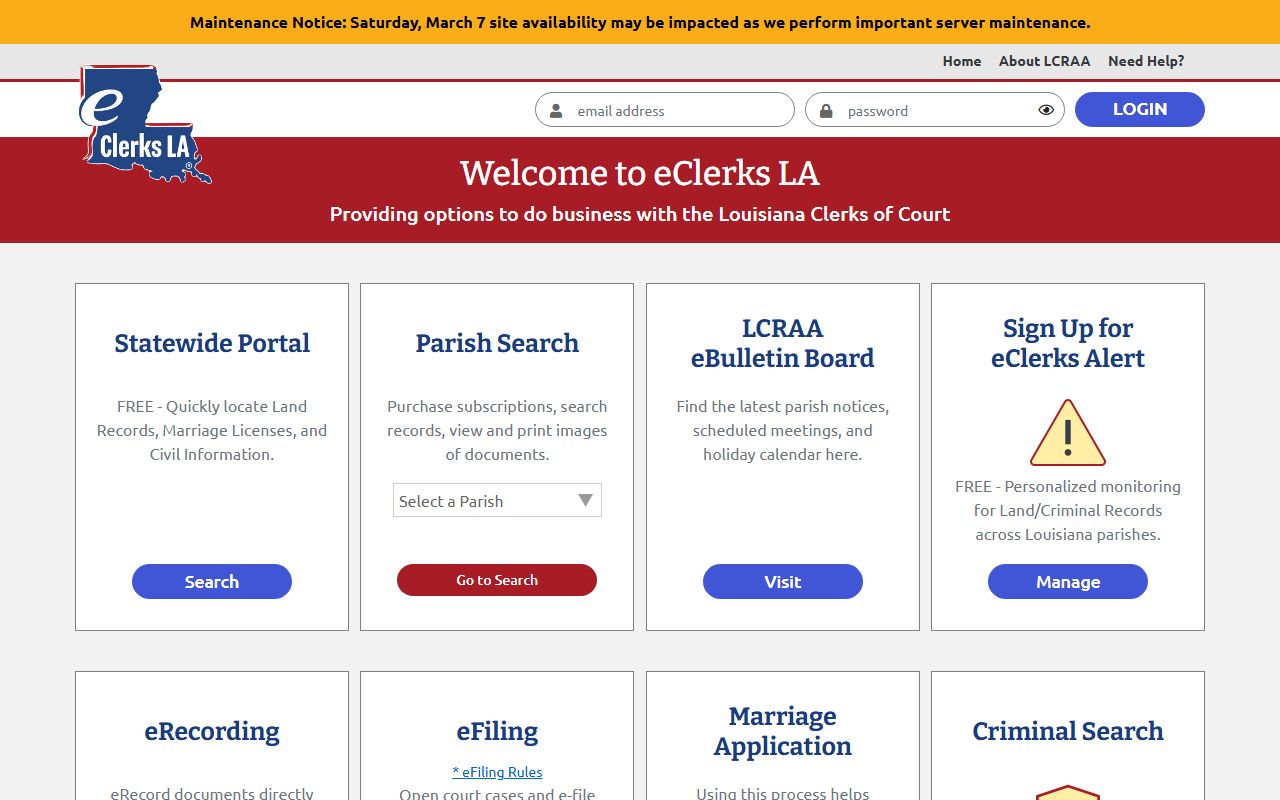
The eClerks LA portal is run by the Louisiana Clerks Remote Access Authority (LCRAA), which the legislature set up in 2014. It gives a free index search for land, civil, marriage, and probate records in parishes that take part. You can also sign up for free eClerks Alerts to watch land records across multiple parishes for new filings.
Some parishes run their own dedicated search systems. Jefferson Parish uses JeffNet, which holds more than 140 million document images. Orleans Parish runs a separate remote access system through the Civil District Court clerk's office, where successions are handled at Docket 1. East Baton Rouge offers Clerk Connect access with probate records going back to 1782, some of the oldest succession materials in the state.
Note: Online access and fees vary by parish. Always check the specific parish clerk's website before visiting in person or sending a mail request.
Documents Inside Louisiana Probate Court Records
A Louisiana probate court record file holds different types of documents depending on whether the person left a will. Testate successions involve a will, while intestate successions are handled when no will exists. Both types produce a public court file at the parish Clerk of Court office, and both are open to inspection under the Louisiana Public Records Law.
Common documents in a Louisiana succession file include the petition for probate of testament or the petition for administration, the certified death certificate, the original will or testament, and the affidavit of death, jurisdiction, and heirship. Courts then issue the order admitting the will to probate and either letters testamentary or letters of administration, which give the executor or administrator the legal authority to act for the estate. These letters are a key document heirs and banks require to access accounts and transfer property.
The sworn detailed descriptive list of assets is another required document. It names all real estate, bank accounts, investment accounts, vehicles, personal property of value, business interests, and debts owed to the deceased. This list states fair market values at the date of death. Louisiana Civil Code Article 876 requires the list to separate community property from separate property, since only the deceased's share goes through the succession. The surviving spouse keeps their half of community property outright.
Documents typically found in a Louisiana succession file:
- Petition for probate of testament or petition for administration
- Death certificate
- Will or testament
- Letters testamentary or letters of administration
- Sworn detailed descriptive list of assets
- Tableau of distribution and final accounting
- Judgment of possession
The judgment of possession is the final court order that closes the succession and transfers property to the named heirs and legatees. Under Louisiana Civil Code Article 871, succession opens the moment a person dies. The judgment of possession acts as an act of conveyance and must be recorded in the parish conveyance records so that the property transfer becomes official and can be traced in future title searches.
How to Search Probate Court Records Online in Louisiana
Searching for Louisiana probate court records online starts with identifying the parish where the succession was filed. Once you know that, you can check if the parish uses ClerkConnect, eClerks LA, or its own portal.
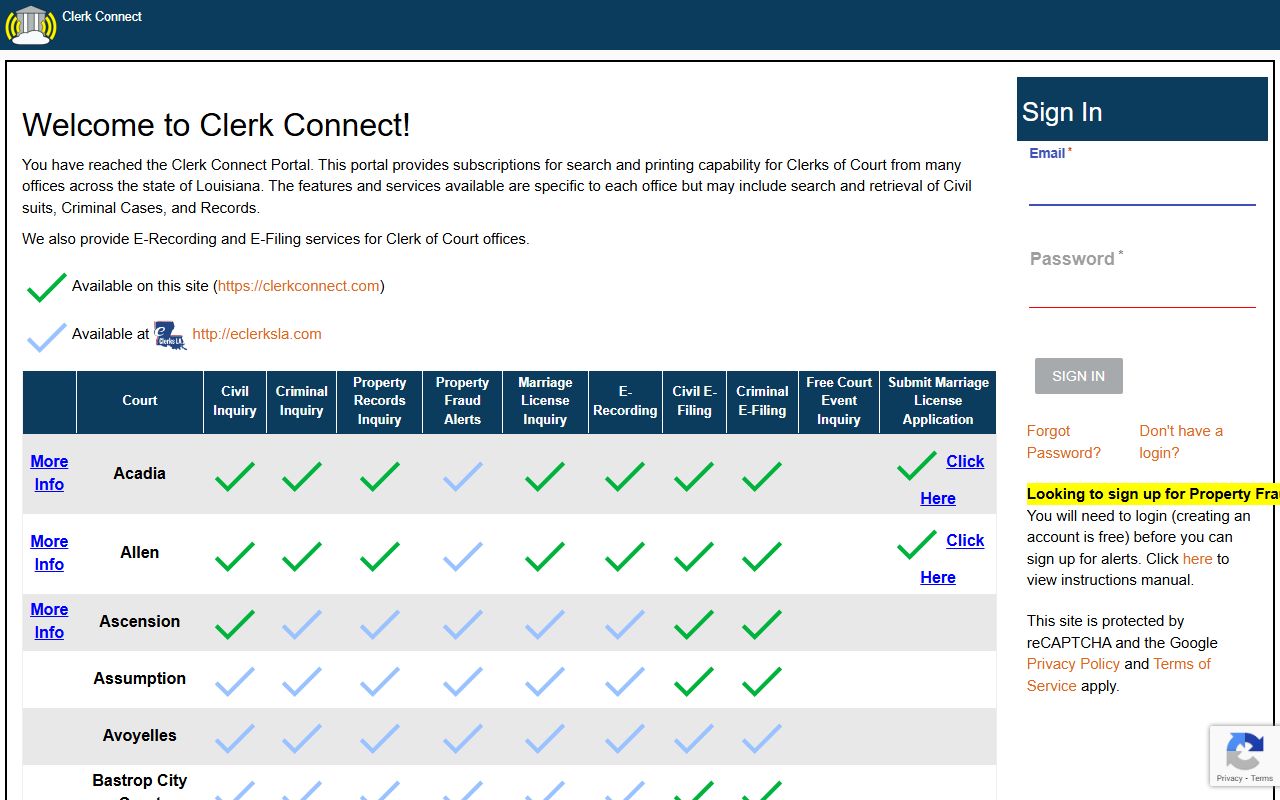
The ClerkConnect system is available for many large parishes and lets you search by party name, case number, or date range. Subscription fees vary by parish but typically run from $20 per day to $50 per month. The system also supports e-recording for select parishes, and e-filing is available in East Baton Rouge, Lincoln, Ouachita, St. John, Caddo, Bossier, and Lafourche Parishes.
For parishes without their own online portal, contact the clerk's office directly. Most clerks take written mail requests for name searches. You provide the deceased person's name, the approximate date of death, and payment for the search fee. The clerk mails back copies of any records found. Many parishes also have public access computers at the courthouse so you can search for free in person.
Note: When you search online and find a case, note the case number before your visit. Staff can pull the physical file faster with a case number than with just a name.
Small Succession Affidavit in Louisiana
Not every estate in Louisiana goes through a full court succession. Louisiana Revised Statute 9:1555 lets heirs use a small succession affidavit when the total estate value is $125,000 or less. This document can transfer bank accounts, vehicles, personal property, and some immovable property without opening a formal case in court. All heirs must sign the affidavit and have it notarized. A 90-day waiting period applies after death in most cases.
Estates where the deceased has been dead for more than 20 years can also use the affidavit process regardless of total estate value. If a small succession affidavit was used, you will not find a succession in the court records. The affidavit itself may be recorded in the parish's conveyance records, so it can still turn up in a land records search.
Note: Small succession rules have specific requirements. An attorney familiar with Louisiana succession law can tell you if an estate qualifies.
Historical Succession Records at the Louisiana State Archives
The Louisiana State Archives holds historical parish records going back to the colonial era. Located at 3851 Essen Lane in Baton Rouge, the archives was set up by the legislature in 1956 to preserve government records. For genealogy research and old estate cases, the archives holds succession materials on microfilm from many parishes.
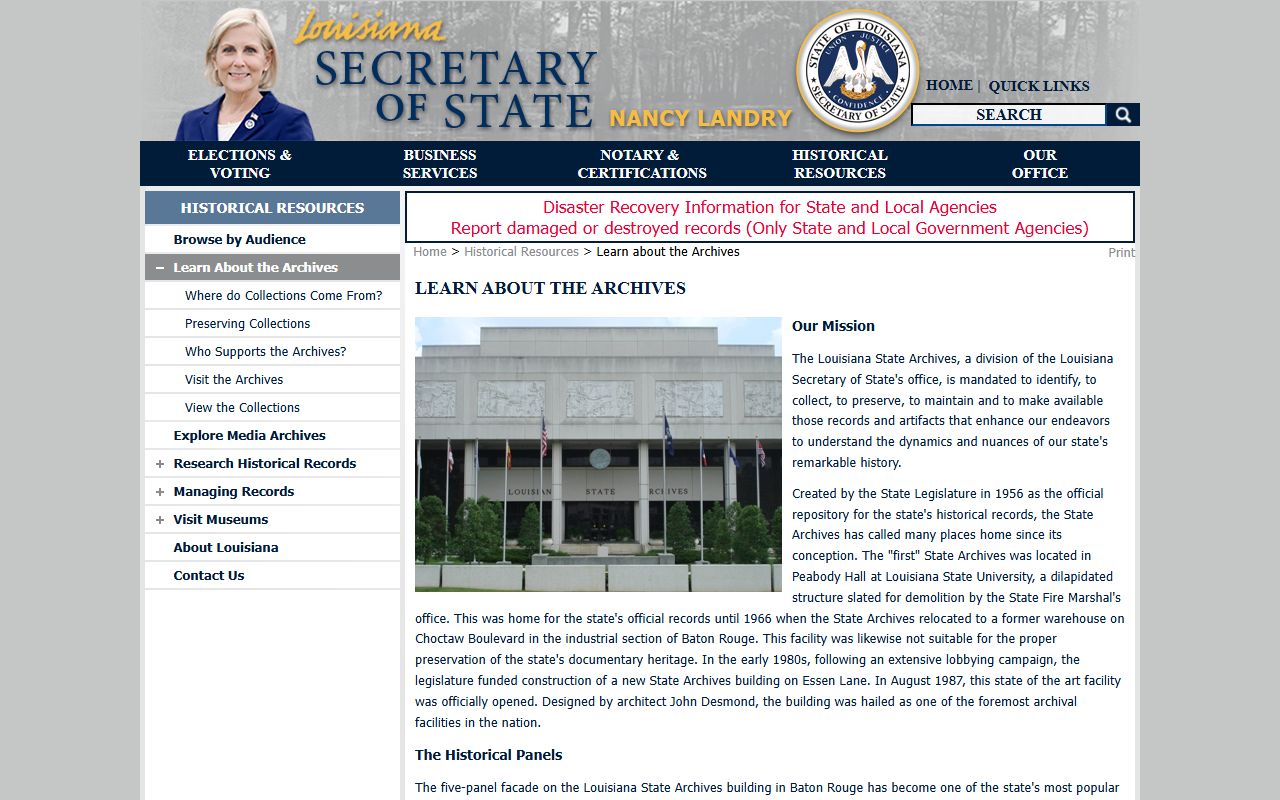
Historical succession records at the archives span many parishes. Ascension Parish has probate records from 1825 to 1904. Natchitoches Parish holds succession records from 1813 to 1900 along with vacant successions from 1807 to 1898, which document estates where no known heirs came forward. Iberville Parish has a succession index going back to 1770 and succession records from 1812 to 1906, plus wills from 1818 to 1927. Orleans Parish holds colonial court of probate records from 1783 to 1811. East Baton Rouge has Spanish West Florida records from 1782 to 1810, and West Feliciana holds probate inventory records from 1815 to 1845.
Researchers must get permission from the Clerk of Court's office before using parish records at the archives. The parish Clerk keeps legal custodianship of parish records under R.S. 4:717, even when the physical materials sit at the archives. Call the archives at (225) 922-1000 before visiting. Some historical records are also searchable through the Louisiana Digital Library.
Louisiana Supreme Court and Succession Laws
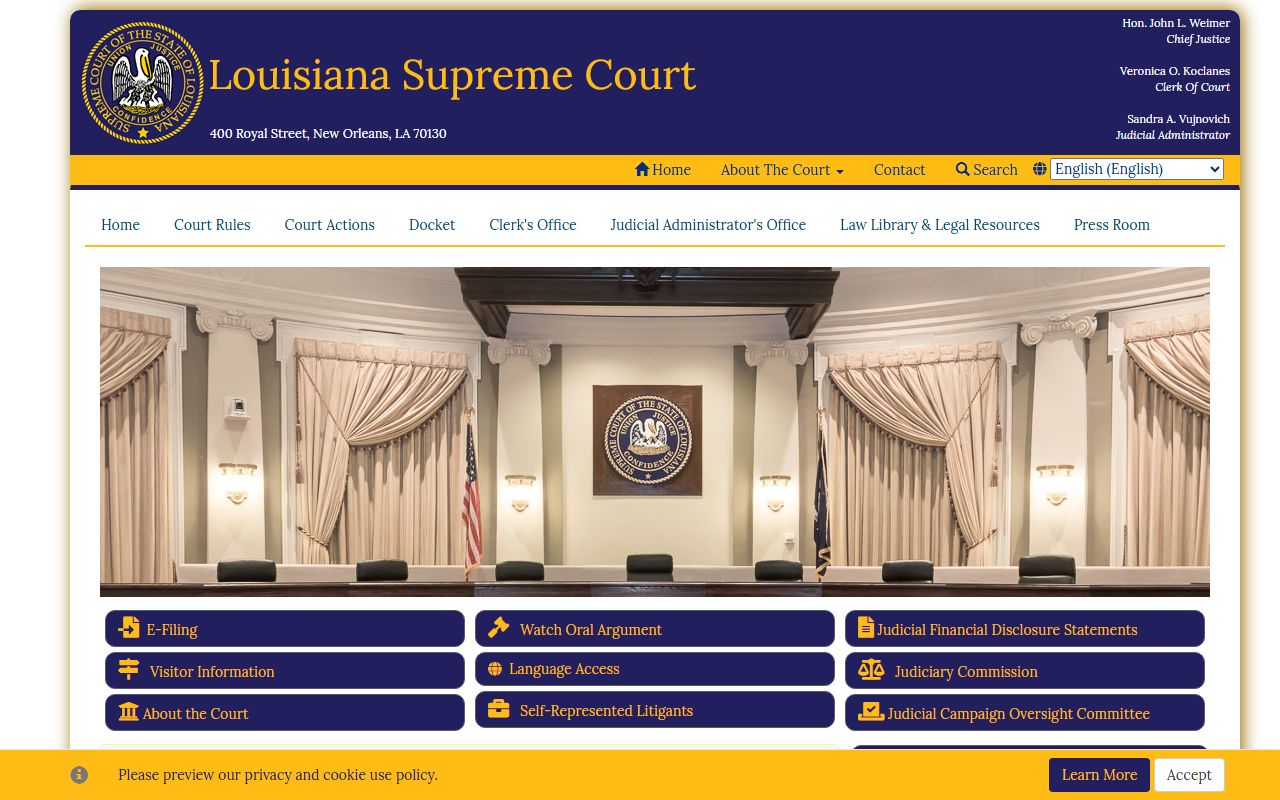
The Louisiana Supreme Court oversees all succession proceedings in the state. It sits at 400 Royal Street in New Orleans and hears appeals from succession judgments that work up through the five circuit courts of appeal. The court issues rules of procedure that govern how succession cases are handled at the district court level in every parish.
District Courts in each parish take succession filings. Louisiana has 42 judicial districts, and most cover more than one parish. The succession is filed in the district court for the parish where the deceased was domiciled. Judges hear succession cases, approve descriptive lists of assets, and sign judgments of possession. Some parishes have dedicated family and probate divisions, while others route all civil matters through a single civil department.
Louisiana's succession law includes forced heirship protections under Louisiana Civil Code Article 1493. Children who are under 24 or who have a permanent physical or mental disability at the time of the parent's death are forced heirs. They have a right to a set portion of the estate regardless of what the will says. That forced portion varies depending on how many forced heirs exist. This is one of the ways Louisiana law differs significantly from other states.
The Louisiana Public Records Law at R.S. 44:1 guarantees that succession files are open to the public. You do not need to explain why you want the records. The clerk must allow you to inspect and copy any public record during regular business hours. Some details may be redacted from public copies, such as financial account numbers and information about minor children. Sealed cases are rare and require a judge's order.
Fees for Louisiana Probate Court Records
Succession record fees vary by parish. Plain copy fees across the state run from $0.50 to $2.00 per page. Certified copies cost more, often $5.00 to $10.00 per document plus the per-page fee. Many parishes also charge a name search fee for mail-based requests, generally $10.00 to $20.00 per name.
Online access fees depend on the system and parish. ClerkConnect subscriptions range from $20.00 for a one-day pass to $50.00 per month for many parishes. Lafayette Parish charges $50.00 per 30-day subscription. Jefferson Parish's JeffNet service offers 24-hour access for just $5.00, or $50.00 per month for a full subscription with e-recording access. The eClerks LA index search is free, but document image access requires a paid subscription.
Note: Fees change. Contact the specific parish clerk to confirm current rates before sending any payment.
Browse Louisiana Probate Court Records by Parish
Each parish in Louisiana has its own Clerk of Court who maintains succession records. Pick a parish below to find local office details, online search tools, fees, and resources specific to that area.
View All 64 Louisiana Parishes
Probate Court Records in Major Louisiana Cities
Residents of major Louisiana cities file succession cases at their parish Clerk of Court. Pick a city below to find the right courthouse, contact details, and search resources for that location.