
Find St. Bernard Parish Succession Records
St. Bernard Parish probate court records document succession cases filed through the Clerk of Court in Chalmette. The office handles estate filings, wills, and succession judgments for residents of the parish, and maintains records covering probate, marriage, divorce, land, civil, and criminal matters. You can access St. Bernard Parish probate records in person at the courthouse or through the parish's eSearch online portal, which requires a paid daily subscription. This guide covers how to search, how to request copies, and what Louisiana succession law means for estates filed in St. Bernard Parish.
St. Bernard Parish Quick Facts
St. Bernard Parish Clerk of Court
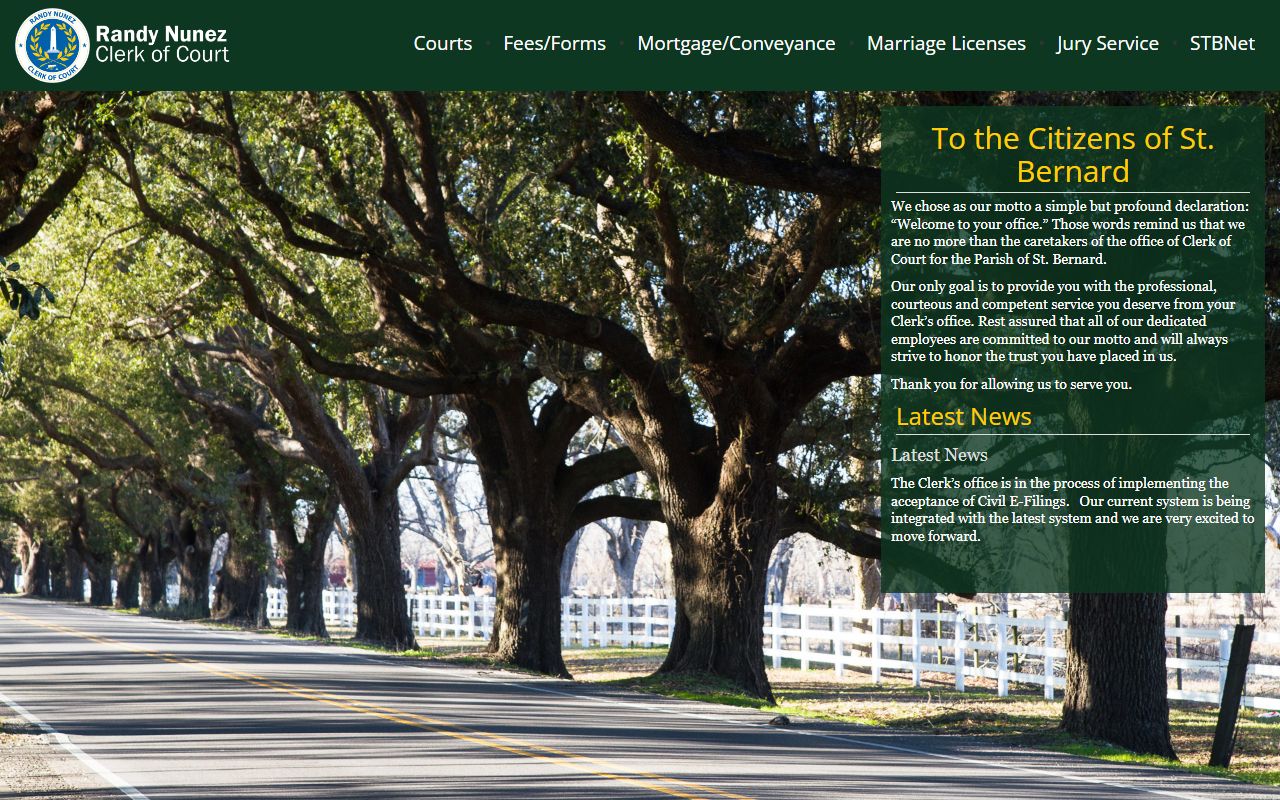
Hon. Randy Nunez serves as the Clerk of Court for St. Bernard Parish. The office is located at 1101 W. St. Bernard Highway in Chalmette. This is where probate and succession records are filed and maintained. The mailing address is P.O. Box 1746, Chalmette, LA 70044. Reach the office by phone at (504) 271-3434 or by fax at (504) 278-4380. Staff can help you identify which records are available and how to request them, though they cannot provide legal advice.
| Clerk | Hon. Randy Nunez |
|---|---|
| Address | 1101 W. St. Bernard Highway, Chalmette, LA 70043 |
| Mailing | P.O. Box 1746, Chalmette, LA 70044 |
| Phone | (504) 271-3434 |
| Fax | (504) 278-4380 |
| Hours | Monday-Friday, 8:30 AM - 4:30 PM |
| Website | stbclerk.com |
The office is open Monday through Friday from 8:30 AM to 4:30 PM. It closes on state and federal holidays. If you plan to visit, call ahead. Older probate files may be in storage and may need time to retrieve before your visit. The clerk's staff will tell you what to expect and whether a specific record is readily available.
Online Access: St. Bernard eSearch Portal
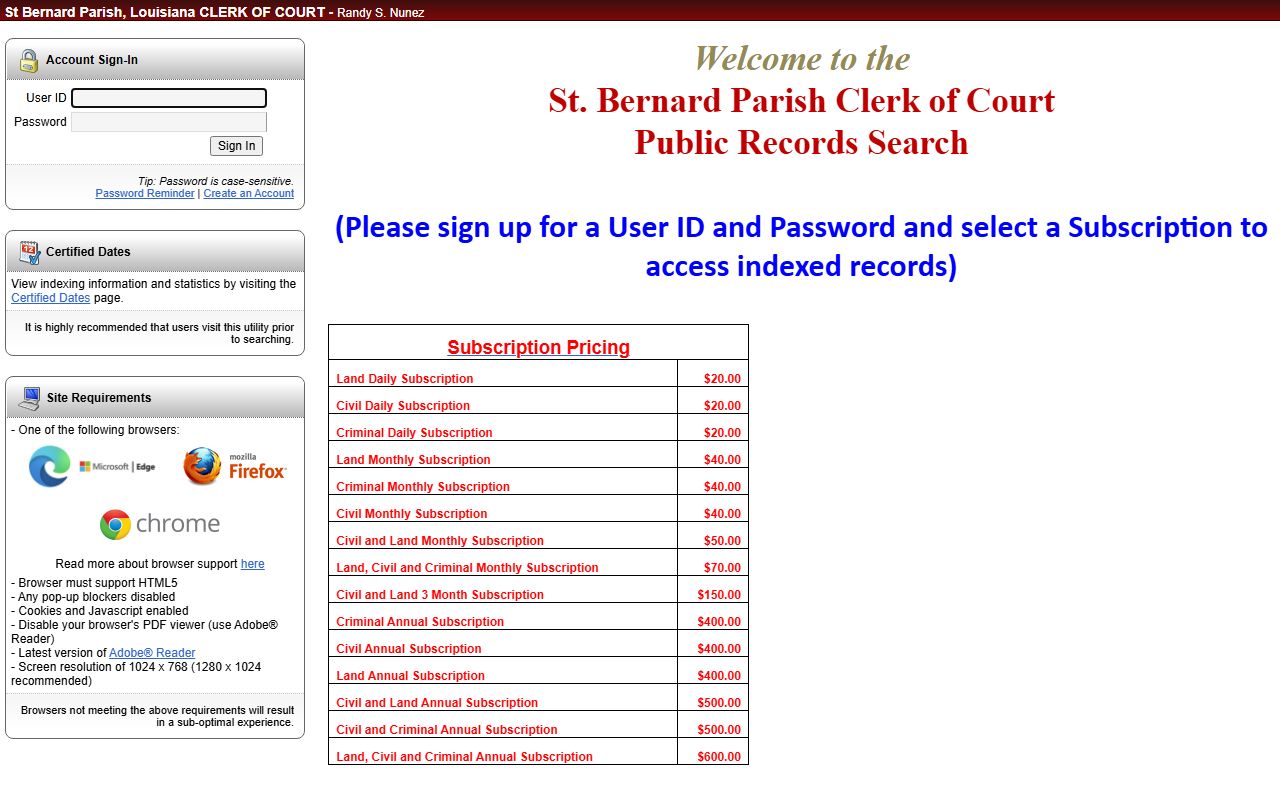
St. Bernard Parish offers an online Public Records Search at records.stbclerk.com. The portal provides access to land records, civil records, and criminal records. Daily subscriptions are available for each category at $20 per day. You can subscribe to one category or multiple, depending on what you need.
There is an important limit to what the online system covers. Marriage certificates, divorce certificates, criminal certificates, and police reports are not available through the eSearch feature. If you need any of those record types, you must contact the Clerk's Office directly by phone or visit in person. The same applies to probate and succession records in some cases. It is best to call the office before subscribing to confirm that the specific records you want are part of the online database. Staff can confirm availability without charge.
An online Public Records Request Form is also available through the clerk's website. This lets you submit a written request electronically rather than visiting in person or mailing a letter. Once submitted, the office will respond with a fee quote and timeline for fulfilling your request.
What St. Bernard Parish Probate Records Include
Probate records in St. Bernard Parish cover the full range of succession filings. A typical file starts with the petition to open the succession. That document names the deceased, the heirs, and the property involved. As the case moves through court, the file grows to include inventories, accountings of debts, court orders, and the final judgment of possession that formally transfers assets to heirs.
Wills are also part of the probate record. Louisiana recognizes two main types. An olographic will is handwritten in full and signed by the person making it. A notarial will is typed and signed in front of a notary and two witnesses. Both become public records once a succession is opened in court. Under Louisiana R.S. 44:1, probate court records are public. Anyone can request to view or copy them. You do not need to be a family member or show a specific legal interest.
The St. Bernard Parish Clerk's office also holds marriage, divorce, land, civil, and criminal records. These may be relevant to a succession case if property transfers, debt disputes, or family law matters are connected to an estate. Knowing all the record types the office holds helps you gather a complete picture of an estate.
How to Search St. Bernard Probate Court Records
You have three main options. Visit the courthouse in Chalmette, use the online eSearch portal, or submit a written request by mail or through the online form. In-person searches are free and allow you to use public terminals in the clerk's office. Online searches require a paid daily subscription. Mail and online form requests are processed by staff, who will provide a cost estimate before pulling and copying records.
When searching, you can look up cases by the name of the deceased, the name of the estate representative, a case number, or a filing date range. Knowing the approximate year of death or the date the succession was opened makes the search faster. For probate cases specifically, confirm with the office that the eSearch portal covers probate filings before purchasing a subscription, since not all record categories are available through the online system.
Mail requests should go to P.O. Box 1746, Chalmette, LA 70044. Include the full name of the deceased, an approximate date or year of death, and a description of the documents you need. The office will confirm whether a match exists and quote a fee for copies before processing your request.
Fees for Copies of Probate Records
Copy fees apply to all records from the St. Bernard Parish Clerk's office. The office charges subscription fees for online access at $20 per day per category. For vital records, death certificates from 2012 onward cost $26. Birth certificates cost $34.
Standard copy fees for court records follow Louisiana's standard schedule. Contact the office at (504) 271-3434 to confirm current per-page rates and any certification fees before making a request. Fees can change, so always verify before sending payment. The office accepts payment in person by cash or check. For mail requests, ask about accepted forms of payment when you call to confirm your request.
Louisiana Succession Law and St. Bernard Parish
Succession law in Louisiana is different from most other states. It follows a civil law tradition drawn from French and Spanish legal systems. Civil Code Art. 871 states that a succession opens the moment someone dies. The estate must be handled through the courts in the parish where the deceased lived. Civil Code Art. 873 confirms that the succession is filed in the parish of the deceased's domicile. For residents of St. Bernard Parish, that means Chalmette is where the case is filed and where the records are kept.
Louisiana law also includes forced heirship rules under Civil Code Art. 1493. Children under 24 years old, or permanently disabled children of any age, are legally entitled to a fixed share of the estate even if a will attempts to exclude them. This protected share is called the legitime. Wills that try to cut out forced heirs can be challenged in court, which sometimes adds filings and delays to a succession case.
Community property rules shape how married couples' assets are handled at death. Under Civil Code Art. 876, assets acquired during the marriage generally belong equally to both spouses. When one spouse dies, their half of the community passes through succession. The surviving spouse keeps their own half without court action. Separate property follows different rules and must be traced back to its origin before marriage or to a gift or inheritance received during the marriage.
For smaller estates, R.S. 9:1555 allows heirs to use a small succession affidavit instead of opening a full court proceeding. To qualify, the net estate value must be $125,000 or less and at least 90 days must have passed since the death. A notary handles the process rather than a court. Not every estate qualifies, so review the requirements carefully or consult an attorney before choosing this option.
Historical Records and the State Archives
For older probate records or cases predating the clerk's current database, the Louisiana State Archives in Baton Rouge holds historical court records from parishes across the state. If you are researching a succession from the early to mid-1900s or earlier, the Archives may have microfilm or scanned copies of records that are not available through the parish clerk's office. Contact both offices to determine where a specific record is held before making a trip.
Additional Resources
The Louisiana Supreme Court website provides information about the state court system and general guides on probate and succession. The eClerks LA platform covers electronic filing and online record access statewide. If you work with court records across multiple parishes, both of these sites are useful starting points.
Legal aid organizations serve residents of St. Bernard Parish who need help but cannot afford an attorney. The clerk's office can direct you to local resources if you ask. Staff cannot give legal advice, but they can point you toward organizations that can help with succession matters, contested wills, and heir rights questions.
Nearby Parishes
These parishes border St. Bernard and also maintain probate court records through their clerks of court.