
Search St. Charles Parish Probate Court Records
St. Charles Parish probate court records and succession filings are maintained by the Clerk of Court in Hahnville, with records stretching back to 1734. The office holds one of the oldest continuous sets of probate and estate records in Louisiana. Succession filings, wills, estate inventories, and judgment of possession documents are all part of the public record under Louisiana law. This page explains how to access St. Charles Parish probate records, what they contain, and how Louisiana succession law shapes the process.
St. Charles Parish Quick Facts
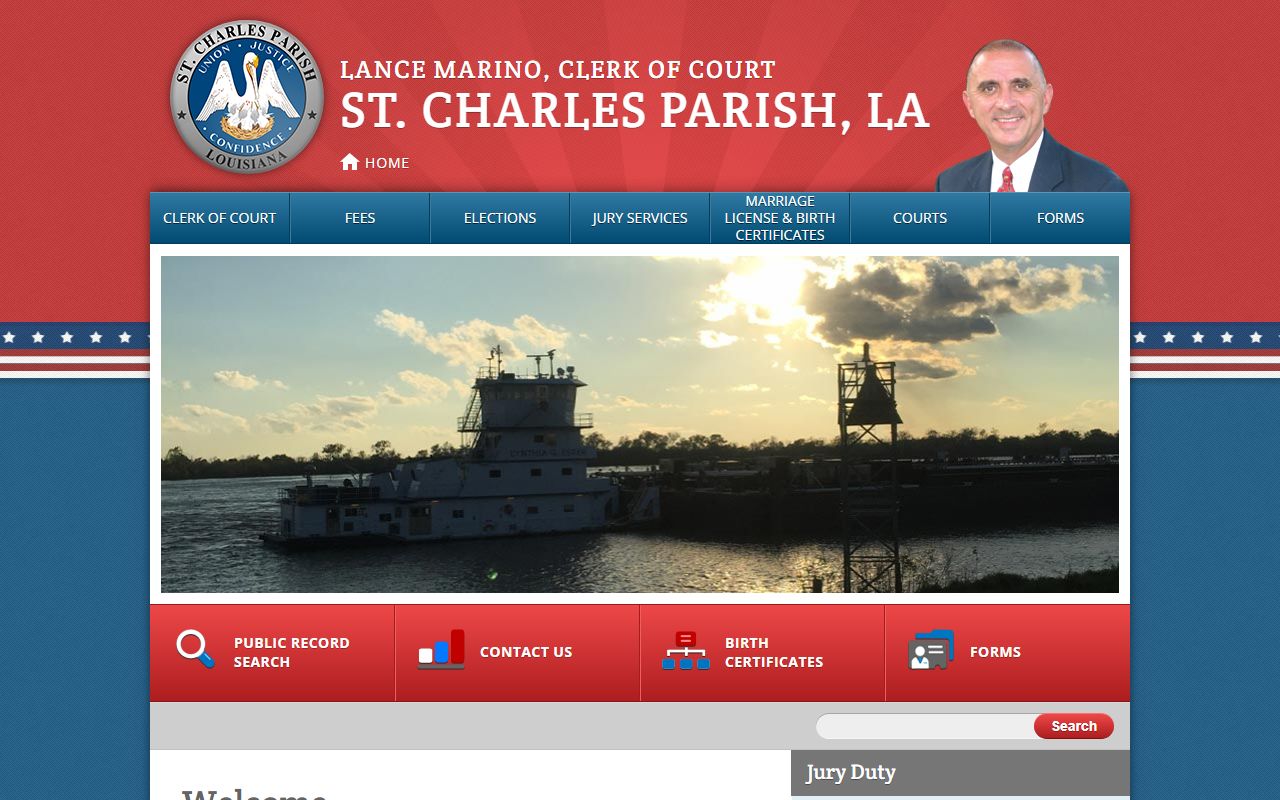
St. Charles Parish Clerk of Court
Lance Marino serves as the Clerk of Court for St. Charles Parish. The office is at 15045 River Road in Hahnville. This is the central location for all probate, succession, civil, family, criminal, and property records maintained by the parish. The mailing address is P.O. Box 424, Hahnville, LA 70057. You can reach the office at (985) 783-6632 by phone or (985) 783-2005 by fax. For written inquiries, email stcharlescoc@bellsouth.net.
| Clerk | Lance Marino |
|---|---|
| Address | 15045 River Road, Hahnville, LA 70057 |
| Mailing | P.O. Box 424, Hahnville, LA 70057 |
| Phone | (985) 783-6632 |
| Fax | (985) 783-2005 |
| stcharlescoc@bellsouth.net | |
| Hours | Monday-Friday, 8:30 AM - 4:30 PM |
| Website | scpclerkofcourt.com |
The office is open Monday through Friday from 8:30 AM to 4:30 PM. Closed on state and federal holidays. For very old records, call ahead. Some historical files may require extra time to retrieve from storage. Staff can let you know what to expect before you make the drive to Hahnville.
Online Record Access
The St. Charles Parish Clerk of Court provides a Public Records Search through their website at scpclerkofcourt.com. The portal covers civil, family, probate, criminal, and property records. This allows you to search remotely before making an in-person trip or sending a mail request. Check the website for current access options and any subscription or per-search fees that may apply.
There is one important change that took effect January 1, 2026. The 29th JDC no longer accepts filings submitted by attorneys through U.S. mail or commercial shipping. Attorneys must now file electronically or in person. Fax filings are no longer accepted either. This rule applies to new case filings, not to records requests from the public. If you are an attorney with filing questions, contact the clerk's office directly to confirm current procedures.
What St. Charles Parish Probate Records Contain
St. Charles Parish holds one of the most extensive historical collections of probate and succession records in Louisiana. The office has maintained estate records since 1734, a span of nearly three centuries. Marriage records go back to 1739. Land and court records also start in 1734. This depth makes the St. Charles Parish Clerk's office a valuable source for genealogical research and historical estate work in addition to modern succession cases.
A probate file typically contains the petition to open the succession, naming the deceased and the heirs. As the case moves forward, the file adds inventories of property, accountings of debts, court orders, and a final judgment of possession. Wills are filed with the court and become public records once the succession is opened. Louisiana recognizes both olographic wills (handwritten by the deceased) and notarial wills (signed before a notary and two witnesses). Both types end up in the probate file when the estate is administered through court.
Under Louisiana R.S. 44:1, all probate court records are public documents. Anyone can view or request copies, regardless of their relationship to the deceased. There is no requirement to show a legal interest before accessing a file.
How to Search St. Charles Probate Records
You can search in three ways. Visit the Hahnville courthouse in person and use the public terminals. Use the online portal at the clerk's website. Or send a written request by mail to P.O. Box 424, Hahnville, LA 70057. Each method provides access to the same records, though the scope of online access may vary by record type and age.
For in-person searches, you can look up cases by the name of the deceased, the name of the succession representative, a case number, or a date range. Knowing the approximate year of the death or the filing date makes the search faster. Older records, especially those predating computerized indexing, may need to be searched using older index books or microfilm. Staff can point you to the right resource for the time period you are researching.
Mail requests should include the full name of the deceased, an approximate year of death, and a description of what you need. The office will confirm whether a record exists and give you a cost estimate before processing copies. Copy fees are $2 per page. Certified copies have additional fees. Contact the office to confirm current rates before sending payment.
Louisiana Succession Law and the 29th JDC
St. Charles Parish is served by the 29th Judicial District Court. All succession cases for residents of St. Charles Parish are filed here. Louisiana succession law starts with Civil Code Art. 871, which provides that a succession opens at the moment of death. The estate must be administered in the parish where the deceased lived, which is why St. Charles Parish handles cases for its residents specifically.
Civil Code Art. 873 confirms that the succession is opened in the parish of domicile. This determines venue and means that the St. Charles Parish Clerk holds the records for all people who lived in the parish at the time of death. If someone owned property in multiple parishes, additional filings may exist elsewhere, but the main probate case follows the domicile.
Forced heirship is a key part of Louisiana succession law. Under Civil Code Art. 1493, children under 24 years old and permanently disabled children of any age have a legal right to a portion of the estate regardless of what a will says. This protected share is the legitime. Wills that try to cut out forced heirs can be challenged in court, and those challenges show up in the probate record as additional filings.
Community property rules also affect estate cases. Under Civil Code Art. 876, assets acquired during a marriage generally belong equally to both spouses. The deceased's half of the community passes through succession. The surviving spouse keeps their own half. Separate property follows different rules. Tracing separate property versus community property is a common issue in succession cases and often requires reviewing marriage records and land records alongside the probate file.
For smaller estates, R.S. 9:1555 allows heirs to use a small succession affidavit. If the net estate value is $125,000 or less and at least 90 days have passed since death, a notary can handle the process without opening a full court case. This option saves time and money but not every estate qualifies. An attorney or notary can help you determine if this path works for a specific estate.
Historical Records and Colonial-Era Successions
St. Charles Parish records going back to 1734 represent one of the oldest continuously maintained sets of court records in the country. The parish's estate and probate rights were maintained through the colonial period under French and Spanish rule before Louisiana became part of the United States. Researchers working on old estates, land grants, or genealogical projects will find St. Charles Parish to be an unusually rich source.
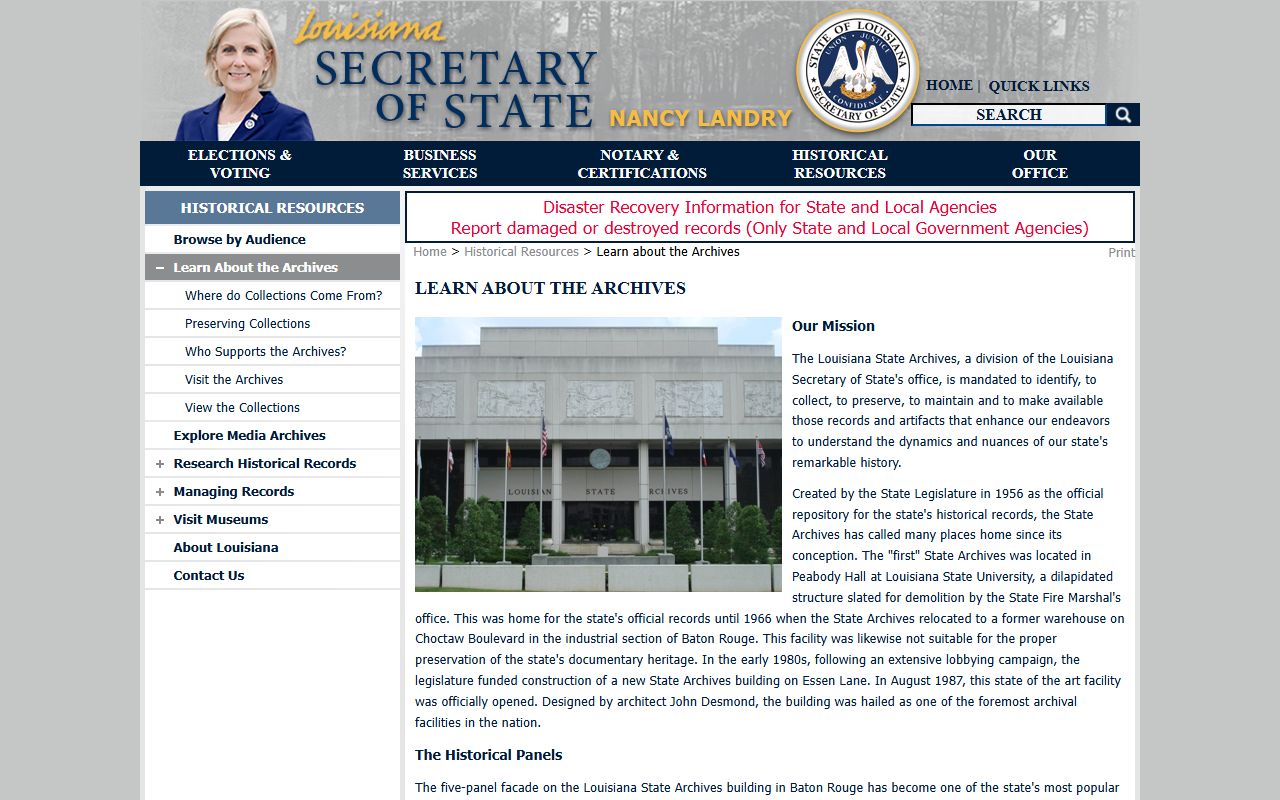
For records that the clerk's office cannot provide, or for additional historical context, the Louisiana State Archives in Baton Rouge holds historical court records, microfilm collections, and vital records from across the state. The Archives is especially useful for records from the 1800s and earlier that may not be fully accessible through the parish clerk.
Additional Resources
The Louisiana Supreme Court website offers general guides on the state court system and self-help resources for people navigating probate and succession. If you work with records across multiple parishes, eClerks LA and ClerkConnect are statewide platforms worth checking for electronic filing and remote record access options.
Legal aid organizations serve the greater New Orleans metro region and may assist St. Charles Parish residents who need help with succession matters. Ask the clerk's office for a referral to local legal resources if cost is a concern.
Nearby Parishes
These parishes border St. Charles and also maintain probate court records through their clerks of court.