
St. Landry Parish Probate Court Records Search
St. Landry Parish probate court records and succession filings are maintained by the Clerk of Court in Opelousas, with records going back to 1808 for marriage and 1809 for probate and court filings. The office is the official keeper of all estate records, wills, and succession judgments for the parish. Online access is available through ClerkConnect and eClerks LA for criminal, traffic, civil, and probate records. This page covers how to search St. Landry Parish probate records, what fees apply, what the records contain, and how Louisiana succession law shapes the process here in Opelousas.
St. Landry Parish Quick Facts
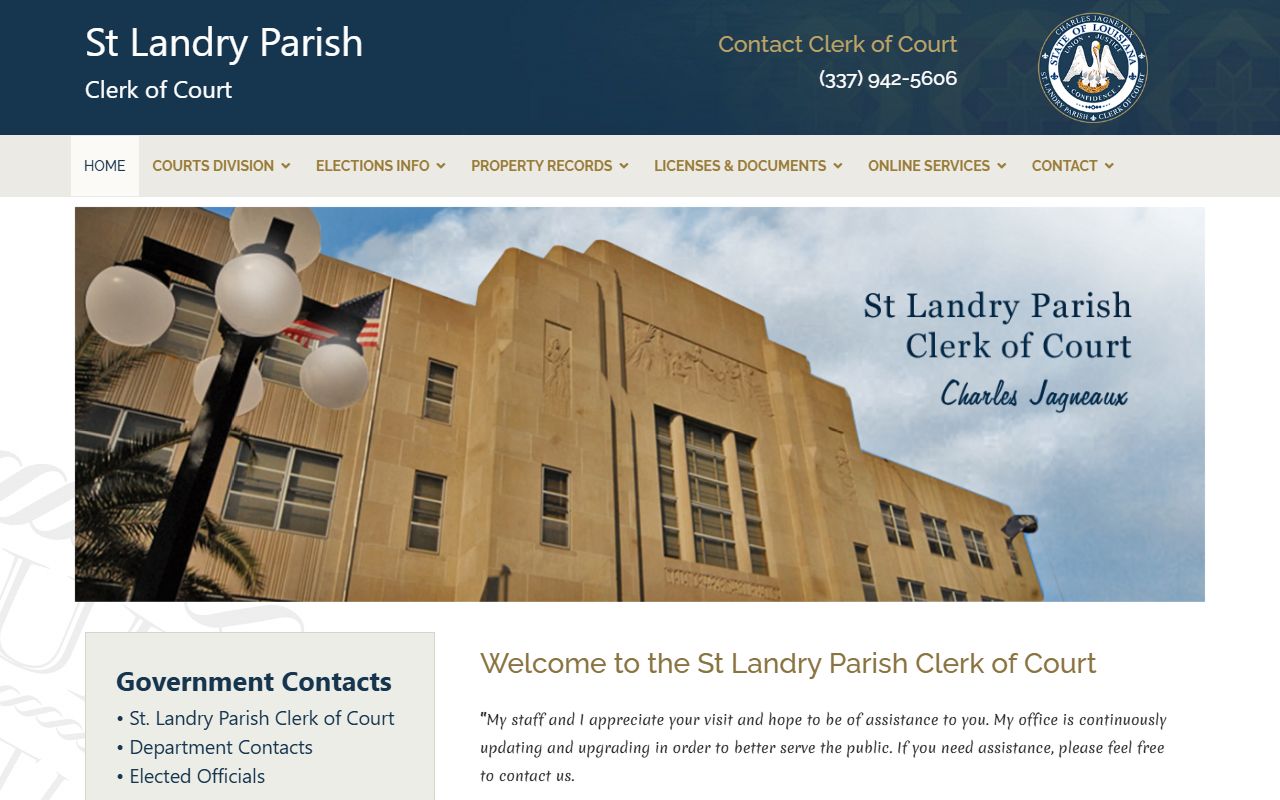
St. Landry Parish Clerk of Court
Hon. Charles Jagneaux serves as the Clerk of Court for St. Landry Parish. The office is at 118 South Court Street, Suite 207, in Opelousas. The mailing address is P.O. Box 750, Opelousas, LA 70571. Reach the office by phone at (337) 942-5606. The office has multiple fax lines: administrative at 337-948-9158, recording at 337-948-7265, and court at 337-948-1653. Call the main number and ask to be transferred to the right department. An extension directory is also available for direct contact.
| Clerk | Hon. Charles Jagneaux |
|---|---|
| Address | 118 South Court Street, Suite 207, Opelousas, LA 70570 |
| Mailing | P.O. Box 750, Opelousas, LA 70571 |
| Phone | (337) 942-5606 |
| Admin Fax | 337-948-9158 |
| Recording Fax | 337-948-7265 |
| Court Fax | 337-948-1653 |
| Hours | Monday-Friday, 8:00 AM - 4:30 PM |
| Website | stlandry.org |
St. Landry Parish opens at 8:00 AM, which is slightly earlier than many Louisiana parish offices. The office closes at 4:30 PM and shuts on state and federal holidays. Note that civil suits are filed with the Courts Division in Suite 121, which is on the basement floor of the courthouse building. Probate and succession matters may be handled in a different suite than general civil filings. Call ahead to confirm which suite covers the specific record type you need so you go to the right place on your first visit.
Online Access Through ClerkConnect and eClerks LA
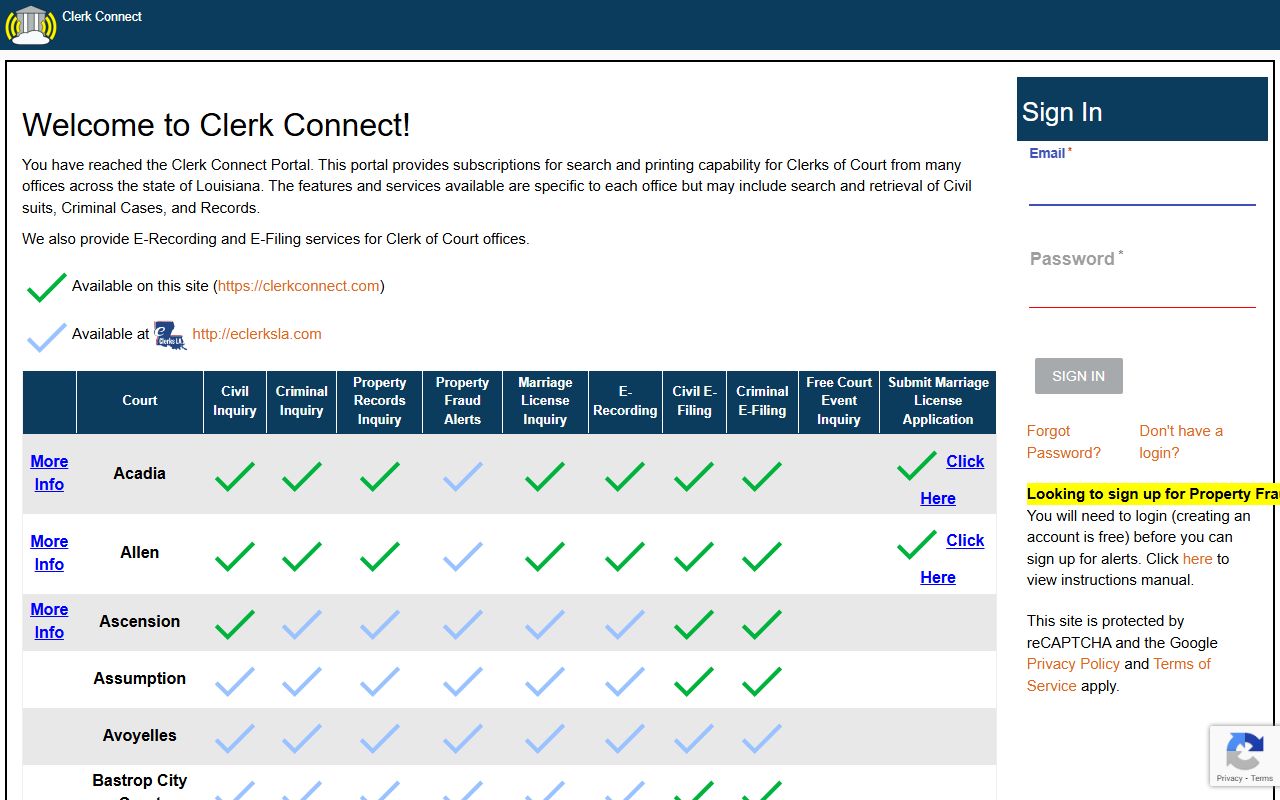
St. Landry Parish offers online record access through both ClerkConnect and eClerks LA. The online system covers criminal, traffic, civil, and probate records. Day access costs $20. If you need to print documents from the system, an additional $1 per page fee applies. Land records are accessible through the eClerks LA platform. Both systems let you search and view records remotely without visiting Opelousas.
These online tools are particularly useful for attorneys, family members who live outside the parish, and researchers reviewing records before making an in-person trip. Once you identify what you need online, you can request certified copies from the Clerk's office. The online search does not replace a certified copy for legal purposes, but it lets you verify a record exists before committing to a copy request and payment. For questions about online access, contact the office at (337) 942-5606.
What St. Landry Parish Probate Records Contain
St. Landry Parish holds probate records from 1809, marriage records from 1808, divorce records from 1813, and court records from 1813. Land records are also maintained. This gives the office more than two centuries of estate and succession records, making it a substantial resource for both legal and genealogical research going back to the early years of Louisiana statehood.
A probate file typically starts with the petition to open the succession, which names the deceased, the heirs, and the assets to be distributed. As the case moves through the 27th Judicial District Court, the file grows to include an inventory of property, an accounting of debts and expenses, court orders, and a final judgment of possession that transfers assets to the heirs. Wills filed with the court become part of the public record once a succession opens. Louisiana recognizes olographic wills, which are handwritten in full and signed by the person making them, and notarial wills, which are typed and signed before a notary and two witnesses. Both types are preserved permanently in the succession file.
St. Landry Parish does not have a separate probate court. Succession matters go through the 27th Judicial District Court, which handles civil and criminal cases as well. All probate filings and orders are maintained by the same Clerk of Court office, so you access everything through a single office in Opelousas.
Under Louisiana R.S. 44:1, probate records are public. Anyone can access them. No special relationship to the deceased is needed to view or request a copy of a succession file from the St. Landry Parish Clerk's office.
Fees for Probate Record Copies
Copy fees at the St. Landry Parish Clerk's office vary by record type. Marriage records cost $1 per page for regular copies and $7 for certified copies. Birth certificates are $34, and an additional $48 covers the birth card if that is also needed. Death records cost $26 from the Clerk's office. Court records, including probate and succession files, are available through the online subscription at $20 per day, with $1 per page for printing individual documents.
Contact the office at (337) 942-5606 to confirm current rates before sending payment. Fees can change, and the specific fee for certified probate documents may differ from the standard copy schedule. The office will give you an exact quote once they confirm which records you need. Mail requests go to P.O. Box 750, Opelousas, LA 70571. Include the name of the deceased and an approximate year of death or filing so the office can locate the record and provide an accurate cost estimate before you send any payment.
Louisiana Succession Law and the 27th JDC
St. Landry Parish is served by the 27th Judicial District Court in Opelousas. All succession cases for parish residents are filed here. Louisiana succession law differs from the probate rules used in most other states because it draws from civil law traditions inherited from French and Spanish rule. Civil Code Art. 871 provides that a succession opens at the moment of death. The estate must be administered in the parish where the deceased lived, which is determined by domicile, not by where property is located.
Civil Code Art. 873 confirms that the succession opens in the parish of the deceased's domicile. This means St. Landry Parish handles estate cases for everyone who lived in the parish at the time of death. If the deceased owned land in other parishes, the main succession file stays in St. Landry, but those other parishes may have separate conveyance records when the property is eventually transferred.
Forced heirship is a core feature of Louisiana law and a common source of succession disputes. Under Civil Code Art. 1493, children under 24 years old and permanently disabled children of any age have a right to a set share of the estate regardless of what a will says. This protected portion is called the legitime. Wills that cut out forced heirs can be contested in court. Those challenges add filings to the probate record and can extend the time it takes to close an estate in Opelousas.
Community property rules under Civil Code Art. 876 also affect how estates are divided. Assets acquired during a marriage generally belong equally to both spouses. At death, the deceased's half of the community goes through succession. The surviving spouse keeps their own half without court involvement. Separate property, which includes assets owned before the marriage or received as gifts or inheritances during the marriage, is treated differently. Sorting out community from separate property is one of the more detailed parts of succession work and sometimes requires reviewing land records and marriage records alongside the probate file.
Smaller estates may qualify for a simplified process. Under R.S. 9:1555, heirs can use a small succession affidavit if the net estate value is $125,000 or less and at least 90 days have passed since the death. A notary handles this rather than a court, which saves time and money. Not every estate qualifies, so review the requirements or consult an attorney or notary before choosing this option.
Historical Records and the Louisiana State Archives
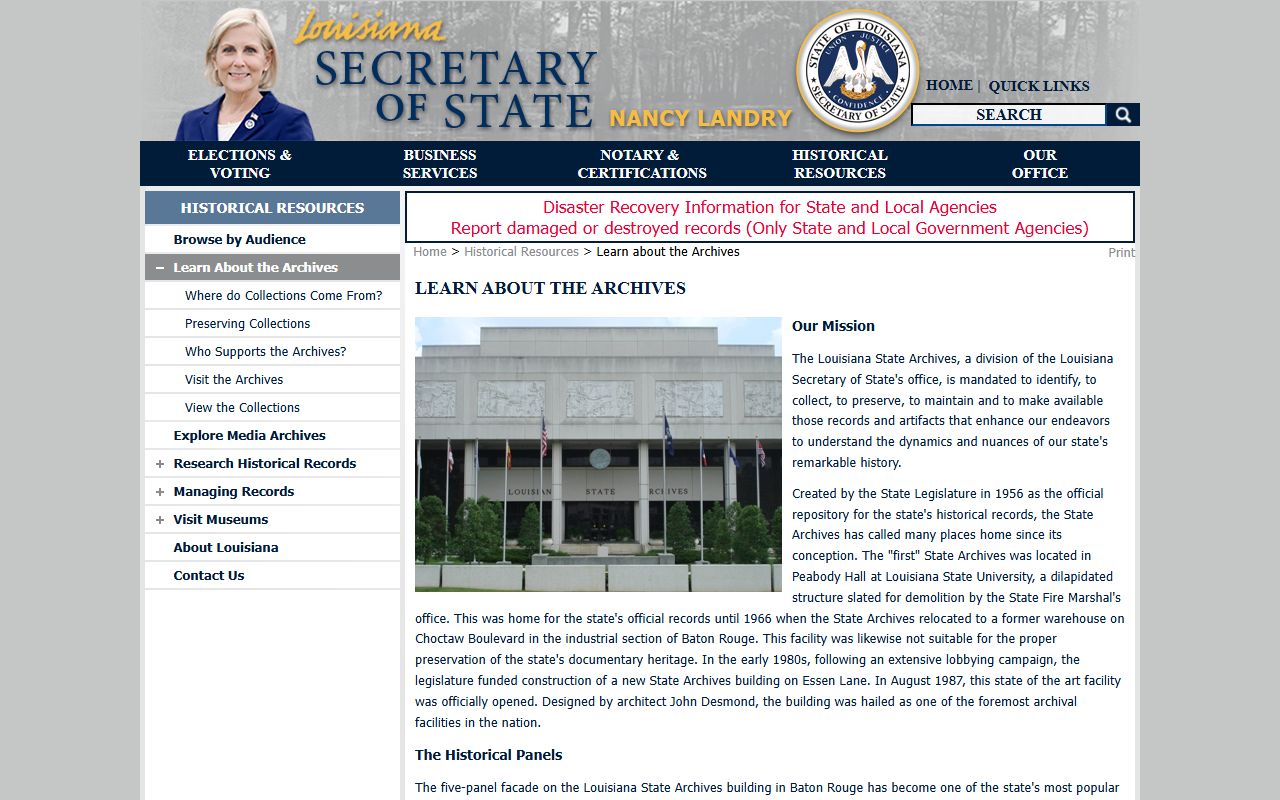
St. Landry Parish records go back to 1808 and 1809 for the earliest filings. For very old cases, some records may be on microfilm or in formats that need special handling. The Louisiana State Archives in Baton Rouge holds historical court records from across Louisiana. If you are researching a succession from the early 1800s, check with both the Archives and the Clerk's office to determine which institution holds the material you need before making a trip to either location. Some older files may have been microfilmed by the Archives even if the originals remain with the Clerk.
Additional Resources
The Louisiana Supreme Court website offers general information about the state court system and self-help guides for people working through probate and succession without an attorney. The Louisiana Clerks of Court Association publishes contact information for all 64 parish clerks and resources for navigating the records access process statewide.
If you need legal help and cannot afford an attorney, legal aid organizations serve the Acadiana and central Louisiana region and may assist with succession filings, will challenges, or heir disputes. Ask the clerk's office for referrals to local providers who handle succession matters. Staff can point you to the right resources even though they cannot offer legal advice directly. For statewide electronic filing and access tools, eClerks LA covers St. Landry Parish alongside many other Louisiana jurisdictions.
Nearby Parishes
These parishes border St. Landry and also maintain probate court records through their clerks of court.