
Search Jackson Parish Succession Records
Jackson Parish probate court records are maintained by the Clerk of Court in Jonesboro and include succession cases, wills, intestate estates, and all related court filings going back to 1880. The parish was created on February 27, 1845 from parts of Claiborne, Ouachita, and Union Parishes, and the Clerk's office has maintained continuous civil and probate records since 1880. Dedicated civil and probate staff handle these files, and the office offers online access through ClerkConnect as well as e-recording for new filings. This page explains how to find records, what they contain, and how Louisiana succession law applies to cases filed in Jackson Parish.
Jackson Parish Quick Facts
Clerk of Court Office in Jonesboro
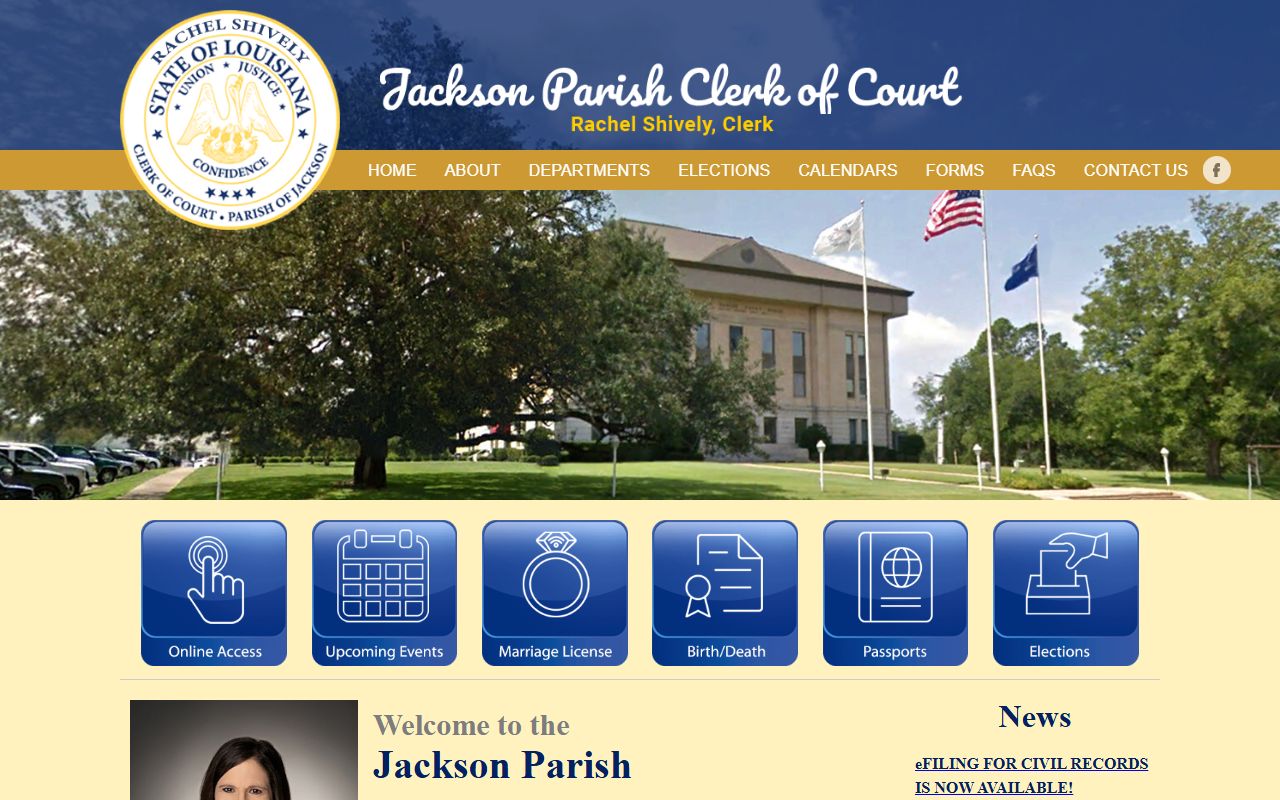
The Jackson Parish Clerk of Court is the official keeper of all probate court records in the parish. Hon. Rachel Shively holds the office. The courthouse is at 500 East Court Street, Room 103, in Jonesboro. For mail requests, use P.O. Box 730, Jonesboro, LA 71251. The main phone number is (318) 259-2424, and the fax is (318) 395-0386. You can reach the clerk by email at rshively@jacksonparishclerk.org. The office is open Monday through Friday from 8:30 AM to 4:30 PM and is closed on state and federal holidays.
| Clerk | Hon. Rachel Shively |
|---|---|
| Address | 500 East Court Street, Room 103, Jonesboro, LA 71251 |
| Mailing | P.O. Box 730, Jonesboro, LA 71251 |
| Phone | (318) 259-2424 |
| Fax | (318) 395-0386 |
| rshively@jacksonparishclerk.org | |
| Hours | Monday-Friday, 8:30 AM - 4:30 PM |
| Website | jacksonparishclerk.org |
The Jackson Parish Clerk's office has dedicated staff for civil and probate matters. Wendy Gaines handles civil and probate records and can be reached at wgaines@jacksonparishclerk.org. Dodie Ford also works in civil and probate and can be contacted at dford@jacksonparishclerk.org. Having a specific staff contact for probate inquiries means you can get direct answers on case availability and copy requests without going through multiple transfers. When calling about a succession file, asking specifically for the civil and probate division will save time.
Online Access Through ClerkConnect
Jackson Parish participates in the ClerkConnect online portal. This system allows users to search succession and probate court records remotely by name, case number, or date range. ClerkConnect is operated statewide and serves multiple Louisiana parishes. Once you subscribe, you can access Jackson Parish case data from any internet-connected device. This is especially useful for attorneys, title researchers, and family members who cannot travel to Jonesboro.
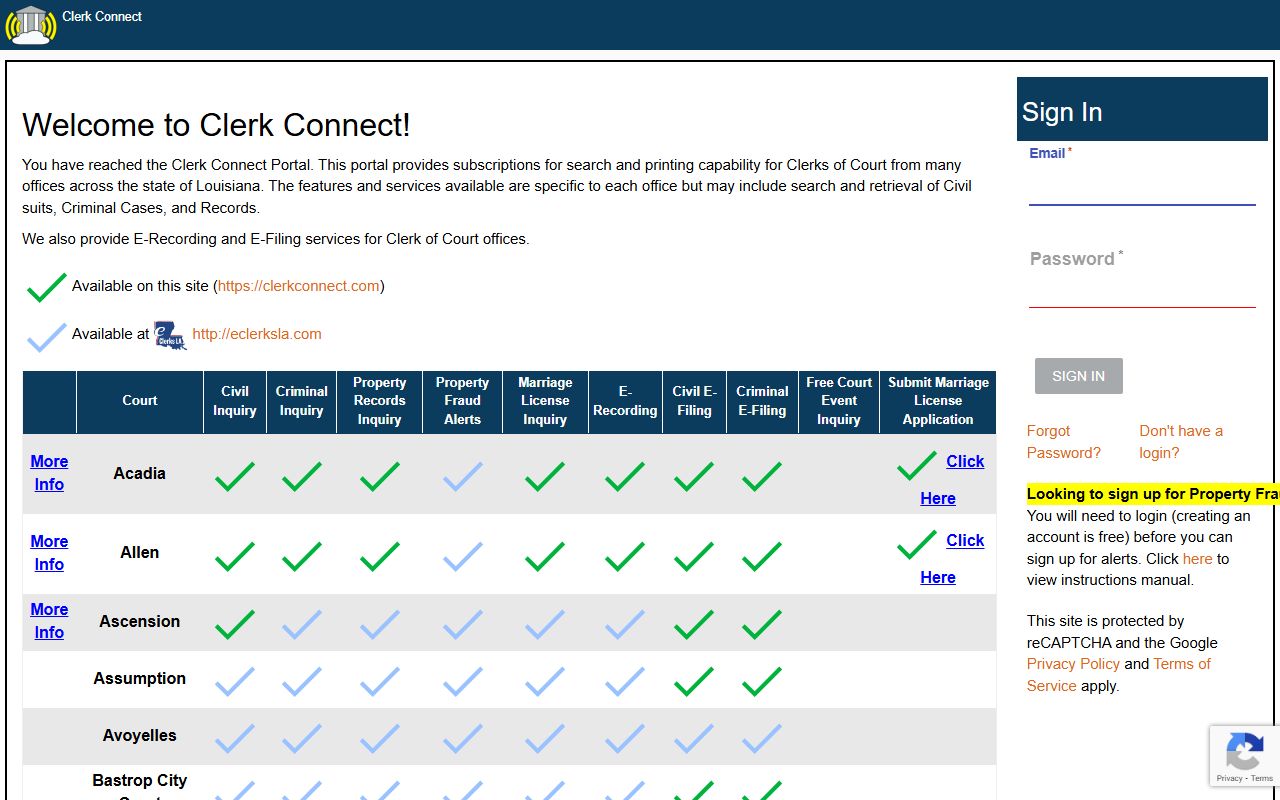
E-recording is also available through the Jackson Parish Clerk's office. This allows attorneys and title companies to submit new filings electronically without coming to the courthouse. If you are actively working on a Jackson Parish succession case, ask the Clerk's office about e-recording options for document submission.
What Jackson Parish Probate Court Records Contain
A typical succession file in Jackson Parish starts with the petition to open the succession. That document names the deceased, identifies the heirs, and describes the estate assets to be distributed. If a will exists, it is attached to the petition or filed as a separate exhibit. The court evaluates the will, determines who the valid heirs are, and oversees the remainder of the proceeding.
After heirs are confirmed, the succession file grows to include a sworn inventory of estate assets. The inventory lists real property, bank accounts, personal belongings, vehicles, and any debts owed by the estate. This document is often the most useful one for property researchers and title attorneys, because it shows exactly what the deceased owned and how each item was classified under Louisiana's property rules.
The final document in most succession files is the judgment of possession. This court order is what legally transfers the estate from the deceased to the heirs. If the estate includes real property, the judgment is recorded in the conveyance records, establishing a clear chain of title. Anyone searching for title history on property formerly owned by a deceased person should look for the succession judgment in both the civil case records and the land records.
All records in the Jackson Parish Clerk's office are public records under R.S. 44:1. You do not need to be a family member or an attorney to request access to these files.
Succession Filing Rules and Jurisdiction
Louisiana law requires that a succession be filed in the parish where the deceased last had a permanent home. This rule comes from Civil Code Art. 873. For anyone who died while living in Jackson Parish, the succession must be opened with the Clerk of Court in Jonesboro. The 2nd Judicial District Court then handles the proceeding.
Under Civil Code Art. 871, succession opens the moment a person dies. The court filing is what creates the formal public record of that transfer. Without it, heirs may have trouble proving legal ownership of property or accessing financial accounts, even years after the death. Opening a succession and getting a judgment of possession is the cleaner, safer path for any estate with real property.
If a person owned real estate in Jackson Parish but died elsewhere, an ancillary proceeding may need to be opened here to deal with that property specifically. The main succession case would remain in the home parish. Researchers looking for records on someone who owned land across multiple parishes should check the land records in Jackson Parish as well as the succession records in the home parish.
Small Succession Affidavits
Not every estate needs a full court proceeding. Louisiana provides a simplified option under R.S. 9:1555. When the gross estate value is $125,000 or less and 90 days have passed since the date of death, heirs can use a small succession affidavit instead of going through the district court. This saves time and reduces legal costs significantly.
The affidavit is sworn by the heirs and may be filed with the Clerk of Court depending on the assets involved. Banks, financial institutions, and title companies often require a copy before releasing funds or transferring property. If you cannot find a formal court case for a person who died in Jackson Parish, ask the Clerk's office whether a small succession affidavit was filed. Wendy Gaines or Dodie Ford in the civil and probate division can check the index quickly by name.
Community Property and Forced Heirship in Louisiana
Jackson Parish succession records follow Louisiana's community property rules. Under Civil Code Art. 876, property acquired during a marriage is community property, owned equally by both spouses. Property owned before marriage or received by gift or inheritance is separate property. When a spouse dies, only their share of the community property passes through the succession. Separate property passes through in full. The inventory in the succession file shows how each asset is classified.
Forced heirship is another area where Louisiana differs from other states. Under Civil Code Art. 1493, children who are under 24 years old or who have a permanent disability are entitled to a protected share of the estate. This share is called the legitime. A will cannot take it away. When a forced heir challenges a will or asserts their legitime claim in Jonesboro, those court filings become part of the succession case record and are available to the public as part of the open file.
Wills Filed in Jackson Parish
Wills become public record once they are offered for probate in Jackson Parish. Louisiana recognizes two main types. An olographic will is handwritten and signed entirely by the person making it, with no witness or notary required. A notarial will is typed or printed, signed before a notary public, and witnessed by two people. Both types can be filed with the Clerk in Jonesboro and become part of the succession case record once a proceeding is opened.
Anyone can request a copy of a probated will from the Jackson Parish Clerk's office. This is worth knowing for people researching family property history or trying to understand how an estate was distributed after a death. If a will was filed but no succession case ever opened formally, ask the Clerk whether the document was filed independently or as part of a small succession affidavit. Staff in the civil and probate division can clarify what is in the record.
Historical Records and the State Archives
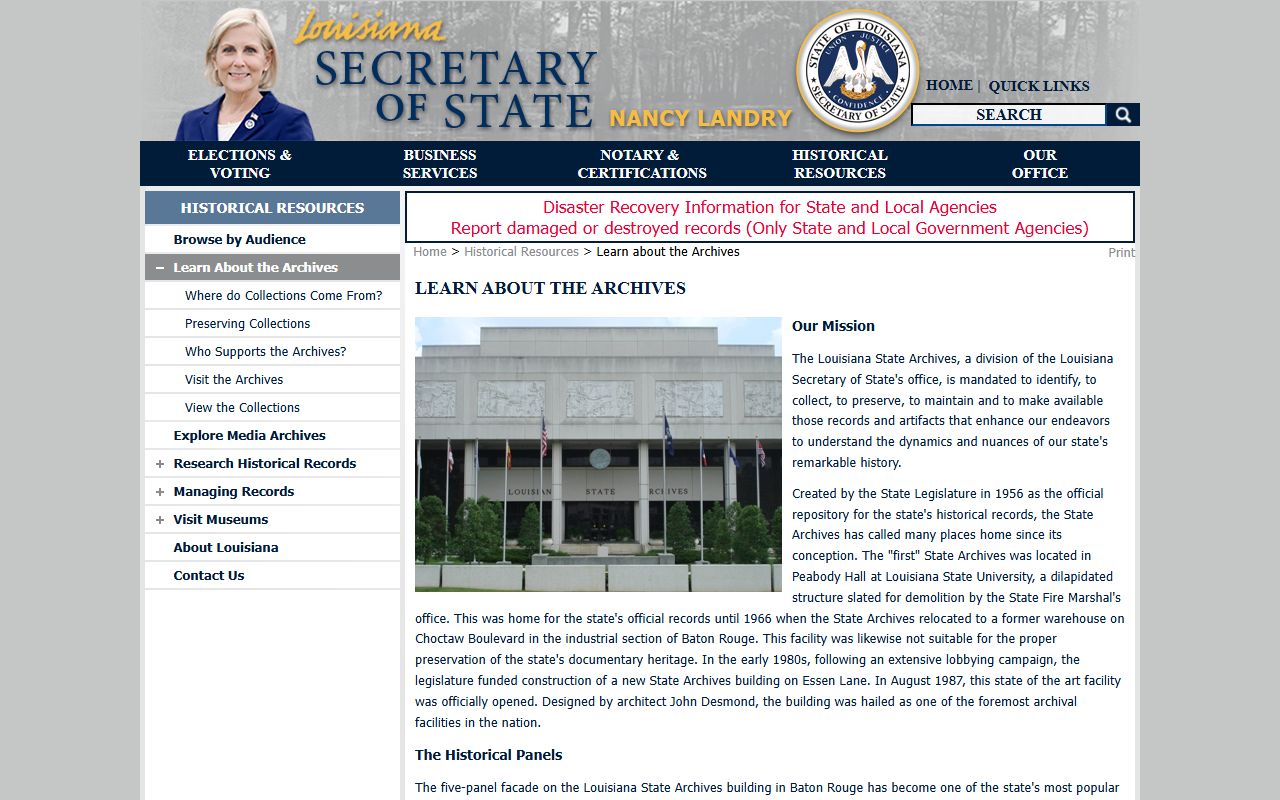
Jackson Parish has maintained civil and probate records since 1880. The parish itself was created in 1845, so there is a gap in the early record period. For families who lived in what is now Jackson Parish before 1880, records from the parent parishes of Claiborne, Ouachita, and Union may be more useful. The Louisiana State Archives in Baton Rouge holds collections from many early Louisiana parishes and is the best resource for pre-parish and early statehood research.
Some of the older Jackson Parish files may exist only in paper or microfilm form. The Clerk's office can tell you which records have been digitized and which require a physical retrieval. Contact the civil and probate staff before visiting if you are researching older files, so they can confirm availability and pull the materials in advance if needed.
Additional Resources for Succession Research
The Louisiana Supreme Court website provides general information about the state court system, judicial districts, and self-help legal resources. It is a good starting point before you contact a clerk's office or hire an attorney for a succession matter.
The Louisiana Clerks of Court Association maintains a directory of all 64 parish clerks and publishes guides about court record access across the state. If your research touches multiple parishes in north Louisiana, the Association's resources can help you identify the right office and understand the procedures in each location. Legal aid organizations in the Jonesboro area may also be able to assist if you need help opening a succession or responding to a contested will.
Nearby Parishes
These parishes border Jackson and may hold records for families who lived across parish lines or in areas that overlap with Jackson Parish's court jurisdiction.